Data annotation services inside your own workspace
ImageLabeling data annotation services put vetted annotators into your workspace, where they label your images under your label schema, your review workflow and your QA rules. You keep the data, the history and the exports. Managed labeling is a monthly retainer from 899 USD per dedicated annotator, available on the Business and Enterprise plans.

Data labeling services that stay under your control
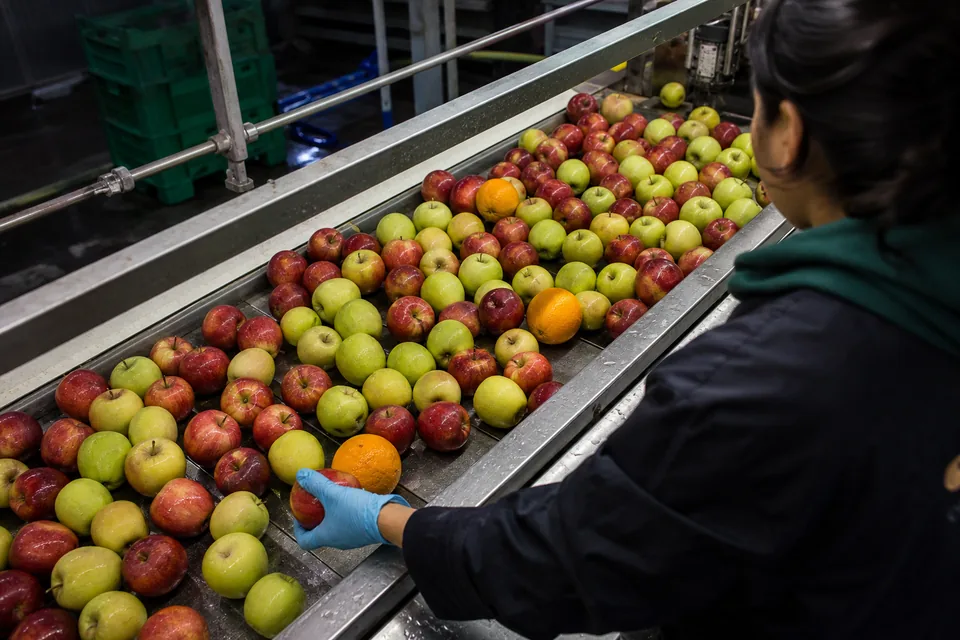
Most outsourcing means shipping images to a vendor, waiting, and getting back a file you cannot audit. Here the annotator joins your workspace with the labeler role. Every box, polygon, mask and keypoint they draw sits in the same project as your in-house work, with the same history of who labeled what and when.
Annotators work on top of auto labeling: the AI model draws the first draft with a confidence per object, and the annotator accepts, edits or rejects each one. Human time goes into the hard cases, not into drawing every easy box from scratch.
- Your label schema, classes, attributes and hierarchical classes
- Your review workflow: labeler, then reviewer, approve or send back with a comment
- Your QA scores per labeler and your issue queue
- Your dataset versions and your exports in COCO, YOLO, Pascal VOC or CSV
When a dedicated annotator makes sense
A dedicated annotator fits teams that label every month, not once. Typical situations are a model that is retrained on fresh production images, a backlog that your engineers should not be clicking through, or a new class added to the schema that needs thousands of older images relabeled.
If you label a few hundred images in total, the editor alone is usually enough. Your own team can work through it with the keyboard first image labeling tool.
- ML teams that need steady weekly throughput without hiring
- Manufacturing and quality teams with an ongoing defect detection dataset
- Retail, agtech and robotics teams with recurring image batches
- Teams that already run an in-house reviewer and want more labeling capacity under that reviewer
How we match annotators to your project

Matching starts from your project, not from a generic pool. When you request a dedicated annotator from the workspace settings, you describe the domain, the annotation types, the volume you expect each month and the hours of overlap you need with your team.
You see the proposed annotator in your workspace before the retainer starts. If the fit is wrong, you ask for another match.
- We look at annotators whose qualification task covered the same annotation types, for example polygons and segmentation masks, or keypoint skeletons
- Domain experience counts: industrial surfaces, shelf products, aerial imagery, warehouse scenes
- Time zone and working hours are matched to your reviewer
- Enterprise workspaces get priority matching, so their requests are handled first
Image annotation services onboarding in four steps
Onboarding uses the same tools your team already uses, so nothing new has to be set up.
Webhooks on Business can notify your pipeline when a batch is reviewed, so a new YOLO labeling tool export or a COCO export can start your training job without anyone watching the queue.
- Invite. The annotator gets a labeler seat with project level access only to the projects you choose.
- Brief. Your label schema, attribute rules and written guidelines sit in the project. Add example images with correct labels for the edge cases.
- Calibrate. The first batch goes through full review. Your reviewer approves or sends back with comments, and consensus on a sample of images shows where the guidelines are unclear.
- Run. After calibration the annotator works through the queue. Their QA score per labeler is visible on the Business plan, so quality is measured, not assumed.
What managed labeling costs
Managed labeling is a subscription, billed monthly, from 899 USD per dedicated annotator. It is added on top of a Business or Enterprise workspace, because those plans include the QA scores, audit log and roles that make outside labeling accountable.
The retainer covers one annotator working on your projects for the month. There are no per image charges, no credits and no one time packages. You can cancel anytime, access runs to the end of the paid period, and payments are final. See all plan details on image annotation tool pricing.
| Plan | Workspace price | Managed labeling |
|---|---|---|
| Business | 499 USD per month, or 249 USD per month billed yearly | From 899 USD per month per dedicated annotator |
| Enterprise | 1,499 USD per month, or 749 USD per month billed yearly | From 899 USD per month per dedicated annotator, priority matching |
Your data stays in your workspace

Annotators never download your dataset to their own machines through us. They label in the browser inside your workspace, with project level access that you grant and remove. Images are encrypted in transit and at rest, are used only to label your dataset and are never used to train third party models. The audit log on Business records every action, and Enterprise adds SAML SSO, a DPA and invoicing. Read more on data security for image labeling.
FAQ
Can I keep my own reviewer in charge?
Yes. The annotator works as a labeler, and your reviewer approves or sends work back. Many teams keep review fully in house.
Can I use managed labeling on Starter or Team?
No. Managed labeling is available on Business and Enterprise, because it relies on QA scores per labeler, the audit log and webhooks.
What if the annotator is not a good fit?
Ask for a new match from your workspace. The calibration batch is designed to show fit early.
Add a dedicated annotator to your workspace
Start a Business workspace, set up your label schema and request managed labeling when you are ready for more capacity.